Journal · Materials
How to Choose the Right Fabric for Your Clothing Brand
2026-09-19 · 8 min
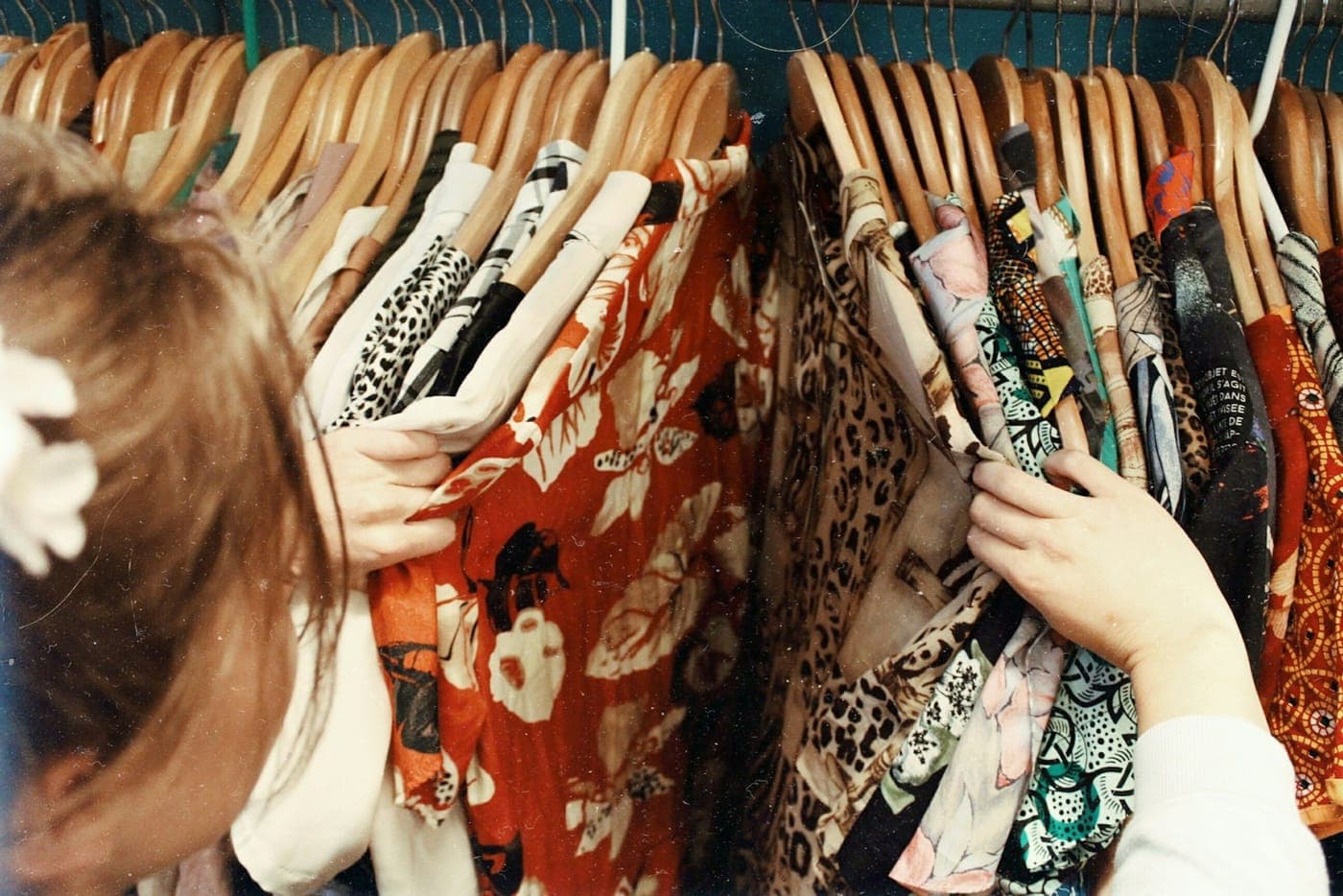
Customers do not buy a fiber name. They buy a handfeel, a drape, and a garment that still fits after a few washes. Fabric is the decision underneath the logo. If you leave it vague, the factory will fill the gap with whatever cloth is easy to cut, and you will spend the sampling round discovering that.
Separate four ideas that get mixed together
Fiber
Fiber is what the yarn is made of. Cotton, polyester, and blends behave differently. Cotton feels familiar and breathes, and it shrinks and holds water. Polyester dries faster and can be engineered for stretch or moisture management, and it can feel synthetic if the knit is cheap. A cotton-spandex jersey recovers at the neck and the hem in a way 100% cotton often will not. The right fiber is the one that matches the use, not the one that sounds more natural on a hangtag.
Construction
Construction is how the yarns are looped. Two cotton fabrics with the same fiber can be different products.
- Jersey is the usual single knit for T-shirts. It can be light or heavy. It curls at cut edges, which is why necklines and hems are specified, not left to chance.
- Fleece is a knit with a soft back, often brushed, used for warmer sweats and hoodies. It can feel plush and look bulky.
- French terry has loops on the back and a smoother face. It often drapes more easily than a heavy brushed fleece, which is why oversized hoodies sometimes use it.
- Rib is the tight, recovering knit used for cuffs, collars, and hems. A beautiful body with a tired rib still feels cheap.
Weight
GSM is grams per square meter. It is a weight, not a quality score. A 320 GSM French terry hoodie does not sit on the body like a 460 GSM fleece hoodie, even if both are called oversized. Heavier is warmer and usually more expensive. It is not automatically better. A summer T-shirt at hoodie weight is a costume.
Use ranges as a language, then pin a target. Published hoodie programs often speak in a band around 280–500+ GSM, from midweight fleece to heavyweight. T-shirt programs often speak around 180–300+ GSM, from everyday jersey to a heavy blank. Those bands are a map. Your style still needs a number, or a narrow range, plus the construction.
Handfeel and finish
Handfeel is what the palm notices: dry, slick, hairy, firm, spongy. Brushing, compacting, and enzyme or pigment washes change it after the knit exists. A wash is not a shortcut around a thin fabric. It can make a good cloth look lived-in. It can also expose a weak one. If you want a wash, say so before the mill books the quality, because not every fleece is sold as wash-ready.
Match the cloth to the garment and the price
Work backwards from the person and the price, not from a trend name.
- A core hoodie meant to be worn three days a week wants a fleece or terry you can reorder, a rib that recovers, and a shrinkage target you accept. Novelty yarn is a hard way to build a reorder.
- An oversized streetwear hoodie wants the pattern and the GSM chosen together. Adding weight without changing the block, or adding volume without changing the cloth, both miss. The fit questions are in what streetwear brands should ask about fit.
- A daily T-shirt wants a jersey you have washed. Neck recovery and shrinkage move the size more than the print does.
- Training clothes want the fabric’s stretch and dry time discussed in the brief. A cotton fleece spec will not become a running short because the label says sportswear.
Look at the category you are actually making. Hoodie programs, T-shirt programs, and the wider product list are split this way because the cloth is not interchangeable.
A worked example
Two founders both say “premium hoodie.” Founder A means a heavy cotton fleece, close to 460 GSM, brushed inside, regular-to-boxy fit, sold to people who want warmth. Founder B means a French terry around 320 GSM, longer body, dropped shoulder, sold to people who want drape and a lighter layer. Both can be premium. They are not the same sample.
If both founders send only the word premium, they may receive the cloth the factory had on hand. If they send the construction and a target weight, the sampling room can order a swatch before anyone cuts a body. That is the cheaper experiment.
Ask for a swatch before a full garment
A swatch will not prove the pattern. It will stop you cutting a sample in the wrong family of cloth. Ask for:
- The fiber content, written the way it would appear on a care label
- The construction: jersey, fleece, French terry, rib, or whatever it actually is
- The GSM, measured, not estimated from a similar quality
- The width, if they have it, so yield and price have a basis
- Whether it is in stock or has to be knitted, and what minimum the mill wants
- A shrinkage target, and whether a wash test is included before bulk
Hold the swatch against a garment you already sell or wear. If you cannot visit, have the swatches couriered. Photographs of cloth flatten the nap and lie about the hand.
Shrinkage is where brands lose a size between sample and the customer’s third wash. Agree the target before cutting, and do not change the compacting or the wash recipe quietly at bulk. “We will see how it comes out” is how a medium becomes a small.
What changes the price, besides the fiber
Custom color, a small dye lot, a special yarn, and a mill minimum can move the price more than the sewing. So can a GSM that the mill does not run every week. If your order is near the factory’s style minimum — often discussed from 100 pieces per color for hoodies and sweatpants, and 150 for T-shirts and sportswear — ask whether the fabric minimum is higher than the sewing minimum. The larger of the two is the real minimum.
Decoration sits on top of this choice. A puff print or a discharge print does not behave the same on every knit. Sample the decoration on the production cloth. That is a production rule, not a styling preference. The customization options — fabric and GSM, print, embroidery, wash — are meant to be locked together.
Lock it before bulk
Before you approve cutting, you should have a sentence you can paste into the next purchase order: fiber content, construction, GSM, color, shrinkage target, and the sample it refers to. If any of those are still “similar to last time,” you do not have a fabric yet.
The factory’s job is to develop toward that sentence and to tell you when the mill cannot hit it. Your job is to keep the sentence stable between the fit sample and the reorder. Custom manufacturing is built around that kind of spec, from the first swatch through packing. If you want the swatches compared against a real sewing floor rather than a trading desk, look at the factory and then send the target with the reference garment.
Once the cloth is chosen, the garment still has to be sampled. How to order your first clothing sample is the next step, and it only works if the fabric in the carton is the fabric you named.