Journal · Development
How to Order Your First Clothing Sample: A Practical Guide
2026-09-20 · 8 min
The first sample is a question, not a souvenir. You are asking whether this factory, in this fabric, can build the garment you described. A sample that only looks good in a photograph has not answered it. You need to wear it, measure it, wash it if the test was agreed, and write down what is wrong.
Decide what this sample is allowed to prove
Factories use different names. These three are enough for a first order:
A development sample
This is an early garment, sometimes in a stand-in fabric, used to see if the idea is even buildable. It is useful when the silhouette is unusual. It is a poor thing to approve for production. If a factory sends one, ask them to mark it as a substitute so you do not fall in love with a handfeel you cannot reorder.
A fit sample
This is the garment that checks pattern, proportion, and construction. It should be cut from the fabric you intend to sell, or as close as the mill can supply for sampling. Wear it. Sit in it. Check the hood, the cuff recovery, the hem, and the pocket bags. One or two sizes are normal here. You are not grading the whole size run yet.
A pre-production sample
This is the garment that should match bulk: the approved fabric, the approved fit, the labels, the decoration, and the packing you will actually ship. Bulk is cut against this sample, not against the memory of an earlier prototype. A published development path for a custom program is a fit sample, then a pre-production sample, then production after you sign off. Ask your factory to use those words in the quote so you both know which one you are paying for.
What to send with the request
You can start without a full tech pack. You cannot start without decisions. Send this in one email, and keep the attachments named:
- The one-page brief: product, silhouette, fiber, target weight, and bulk quantity per color
- Photos of a reference garment, front, back, and details, plus what you want changed
- The physical reference, if you can courier it — photos do not show how a fleece recovers
- Measurements you care about, even if they are only body length, chest, sleeve, and shoulder
- Artwork in vector format, if the sample includes print or embroidery, with placement in centimeters
- A note that says the sample is blank, if the artwork is not ready
- The address for the courier, and who should approve it
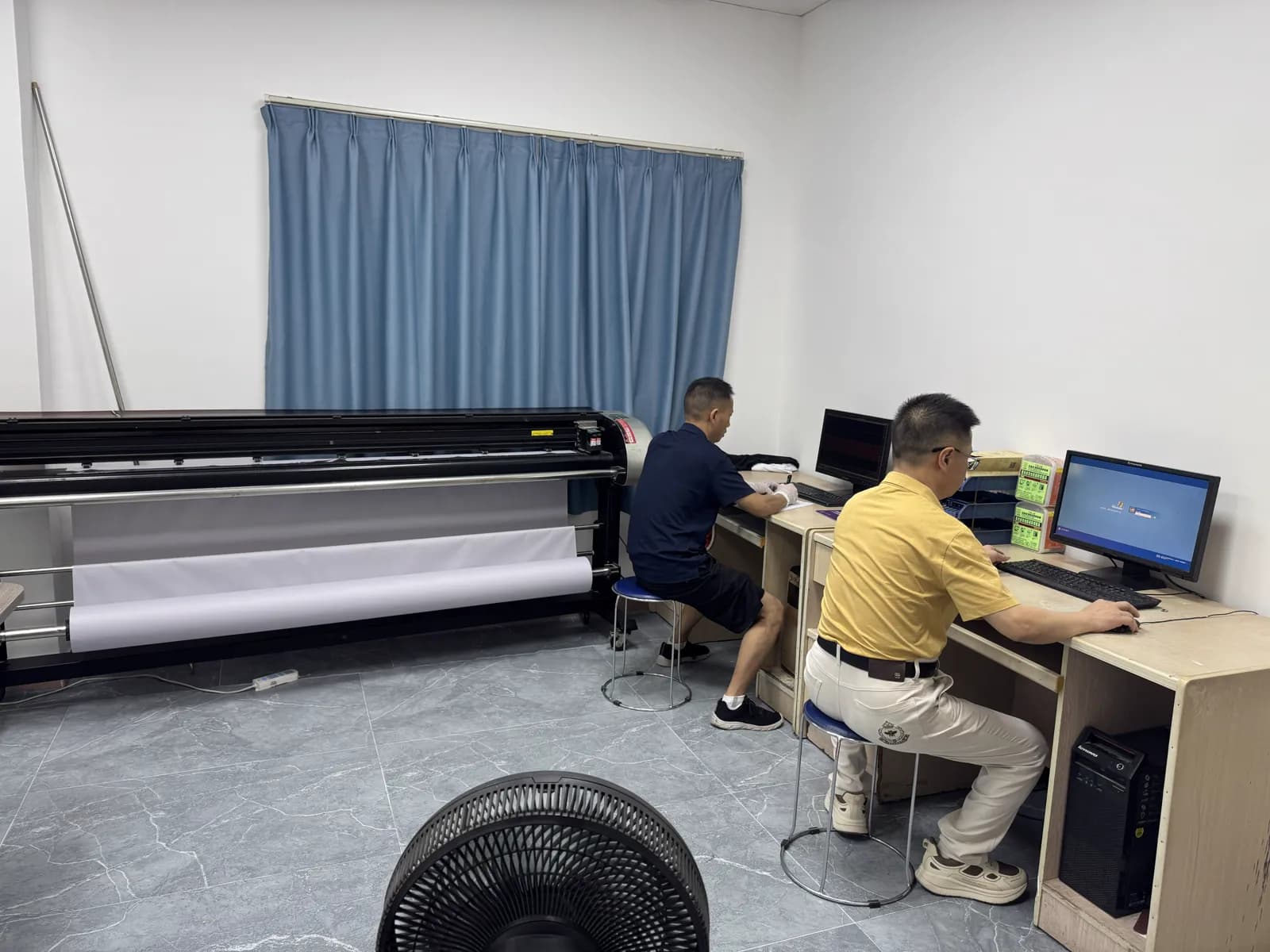
Patterns are developed before anyone should be cutting bulk. On a factory visit, or in photographs, look for a sampling desk and a pattern plotter, not only sewing machines. That room is where your fit is decided. Pindon’s factory page includes those sampling desks beside the plotter, which is the sort of view worth asking any manufacturer to show.
If the product is a hoodie, send the brief in the shape described in how to brief a custom hoodie manufacturer. Graded specs and vector artwork are what move a sample toward bulk. Vague “oversized” language is what creates a second round. Fit questions for streetwear are spelled out in what to ask about fit and fabric.
An example request
Here is a request that a pattern maker can use. It is an example, not a form you must copy word for word.
“Please cut one fit sample of an oversized pullover hoodie, size large, in cotton fleece as close as possible to 460 GSM. Dropped shoulder, rib cuff and hem, lined hood, cotton drawcord, no print. Match the attached grey hoodie on body length and hood depth. Make the sleeve 2 cm longer than the reference and keep the cuff tight enough to recover. This sample is for fit only. We will add a left-chest embroidery after fit approval, artwork to follow. Please confirm the actual fabric and the date you can courier it once the cloth is in hand.”
That email tells the factory what is fixed, what is different from the reference, and what is deliberately missing. The GSM figure is a target for this example. Your number should come from the cloth you want, which is the subject of how to choose fabric.
What to check when the carton arrives
Do this in one sitting, with the brief open. Write on the garment tag or in a shared note, not in a chat that will scroll away.
- Confirm the fabric. Read the description the factory sent with the sample. If it is not the bulk cloth, decide whether you are commenting on fit only.
- Measure the points you listed, and any point that looks wrong. Compare with the reference, not with a guess.
- Wear it for an hour. Hoods that look right on a table often sit too far back. Cuffs that look neat often stop recovering.
- Look at construction: seam allowance, needle holes on the fleece, rib join, pocket opening, and loose ends.
- If decoration was included, check placement, color, and handfeel. Stiff print on a soft fleece is a product decision, not a surprise to discover at bulk.
- Wash it only if you agreed a wash test. An unplanned wash can shrink a sample and start an argument about whose fault it was.
Photograph the problems with a tape in the frame. “Sleeve feels odd” is hard to sew. “Sleeve pitch twists; please rotate so the underarm seam hangs straight, keep body spec” is a revision.
How to ask for a revision
Change as few things as possible. A second sample that changes the fabric, the fit, and the graphic at once will not tell you which change worked. Keep the approved parts stable.
Ask for a date that starts when they have what they need, not a date from the day you hit send. Fabric that is not in stock moves the calendar more than sewing does. Put that dependency in the email so a delay is visible early.
Pay the sample invoice as its own bill. Mixing it into a bulk deposit makes it harder to stop if the revision is still wrong. You are buying information.
When the sample is allowed to become bulk
Move on when you can say yes to all of these:
- The fabric on the sample is the fabric you will cut, or the difference is written down and accepted
- The measurements you care about are approved, with tolerances you would accept on a repeat order
- Decoration, if any, was struck off on that cloth
- Labels and packing are specified, even if they arrive on the pre-production sample rather than the first fit sample
- The bulk quantity per color meets the factory’s minimum for that style
Decoration and labels are easy to treat as a later problem. They change the cost and the calendar. Specify them on the customization side of the program before the pre-production sample, not after the bulk is cut. The wider path — sampling through packing — is what custom manufacturing is set up to do.
Minimums still apply at this point. Hoodies and sweatpants are often discussed from 100 pieces per color per style, and T-shirts and sportswear from 150. Those are starting points published for quoting, not a promise that every fabric hits the same number. Confirm yours in the quote.
When you are ready, send the approved sample notes with the quote request. If you do not yet have a factory you trust with that sample, go back to how to find a clothing manufacturer in China and shortlist before you approve a pattern you may not be able to reorder.