Journal · Sourcing
How to Find a Reliable Clothing Manufacturer in China
2026-09-21 · 9 min
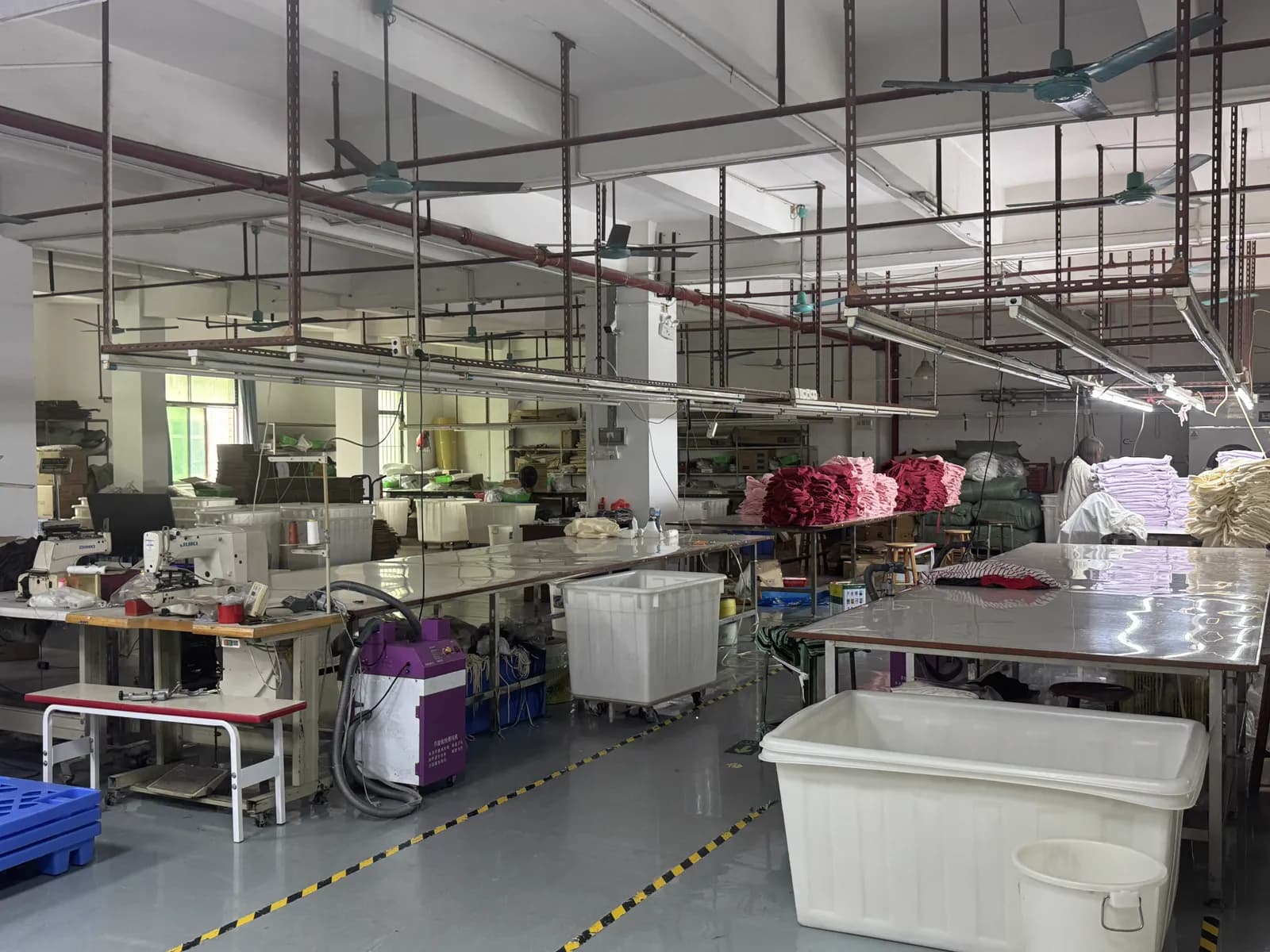
A reliable clothing manufacturer is the factory that can make your garment again, to the sample you approved, on a date you both wrote down. The lowest quote is a different question. China has a deep apparel industry, and it also has trading companies, sample rooms that do not sew bulk, and factories that are excellent at a product you are not making. The work is to tell those apart before you wire a deposit.
Start with the product, not a directory
Directories sort by keyword. Your shortlist should sort by what the factory actually sews. A knitwear factory that lives on heavyweight fleece is a poor bet for a woven overshirt. A T-shirt line may be the wrong room for a technical shell. Write your product in one sentence — fiber, garment, and rough quantity — and only then look for factories that already make that kind of garment.
Guangdong is one of the places overseas brands look, and Dongguan sits inside that apparel region, with fabric mills, trim suppliers, and sewing workshops in the same geography. That proximity is useful. It is not, by itself, proof that any single factory is the right one. You still have to match the product.
What “reliable” means in practice
Reliability is boring on purpose. It shows up in writing and in a second sample that matches the first.
- They answer in specifics: fabric, minutes, minimums, and what is excluded from the price.
- They will sample on the cloth you intend to bulk, or they will label a substitute as a substitute.
- They can show you a current sewing floor, not only a showroom.
- The same person, or a clear deputy, stays on the project from sample to shipment.
- They talk about the next order while they are still making the first. Patterns and tolerances are how a brand stays consistent.
English-language replies matter if your team does not read Chinese production notes. So does the habit of sending sample photos against a measurement sheet, rather than a single glamour shot. Speed of the first reply is a weak signal. Clarity of the third reply is a stronger one.
How to build a shortlist of three
Three factories are enough for a first style. More than that and you will not compare them properly. Fewer, and you have no fallback when the first quote excludes half the trims.
- Ask other brands, in private, who sews a similar product. A name from someone who has reordered beats a cold directory listing.
- Look for factories that publish their own floor, sampling room, and product categories. Stock photos of anonymous warehouses are not a tour.
- Send the same one-page brief to each. Same reference garment, same target quantity per color, same question list.
- Drop anyone who will not say whether they cut and sew the garment themselves.
A useful brief is the same one in how to start a clothing brand. If you already know the style is a hoodie, pair it with how to brief a custom hoodie manufacturer.
Questions worth asking on the first call
You are trying to learn how they work, not to trap them. These questions do that:
- Do you cut and sew this product in your own workshop, or do you place it with another factory?
- What is the minimum per color, per style, for this fabric? What raises it?
- Will the fit sample be cut from bulk-intent fabric? If not, what am I approving?
- What is included in the unit price: fabric, sewing, print or embroidery, labels, polybag, carton?
- How do you approve color and decoration before the bulk cut?
- What do you need from me before a sample can start, and what date depends on fabric being in hand?
- Who writes to me when a measurement is off, and in which language?
Ask to see the floor. If a visit is realistic, go during production hours. If it is not, ask for recent photos or a short video of the sewing line and the place where patterns are made. Compare that with the factory photographs a manufacturer is willing to put on its own site. A trading office can forward a quote. It cannot show you numbered sewing stations it does not have.
How to read a quote
Lay the quotes in a sheet with the same rows: fabric description and weight, yield assumptions if they shared them, sewing, decoration, labels, packing, sample cost, and what the lead time counts from. A lower unit price that excludes the woven label and the carton is not lower once you add them back.
Minimums are part of the price. A factory that needs more pieces per color is not automatically worse. It may be the one that can hold shade consistency. Write the quantity you can actually sell, and let a factory tell you if that quantity fits the cloth. Do not stretch the order to hit a number you cannot pay for or store.
Lead time should be tied to a starting point: fabric in house, sample approved, deposit received. “Thirty days” means nothing until you know thirty days from which event. Peak season moves dates. Ask them to say so.
Red flags
- A unit price that arrives before they ask what the garment is.
- Refusal to say where it is sewn, or pressure to skip the sample and “trust the bulk.”
- A sample in a different fabric, presented as if it were the production cloth.
- Artwork or labels added that you did not specify.
- Payment details that change account name at the last minute. Confirm the company name on the invoice matches the company you have been talking to.
None of these require you to be suspicious of China as a place to manufacture. They are the same checks you would use anywhere. The distance makes written confirmation more important, not optional.
One factory in Dongguan, as an example
Dongguan Pindon Apparel Co., Ltd., which trades as Pindon Clothing, is one cut-and-sew manufacturer in Humen Town, Dongguan. It develops custom hoodies, T-shirts, sweatpants, streetwear, and sportswear for overseas brands, including private-label programs. The work is to your block and fabric, rather than a catalog of generic blanks.
Published program notes put a typical minimum at 100 pieces per color per style for hoodies and sweatpants, and 150 pieces for T-shirts and sportswear. Complex washes, special fabrics, or a full collection can sit higher, and the number is confirmed when the style is quoted. The sequence described for a program is a brief or a reference sample, a fit sample, a pre-production sample, then bulk after you approve. Fabric is discussed by composition, weight, handfeel, and shrinkage target. If you already have a garment, construction can be matched within tolerances you agree.
Decoration on offer includes screen printing, puff printing, direct-to-garment, embroidery, 3D embroidery, washed finishes, and heat transfer. The point they publish, and that you should require of any factory, is that decoration is sampled on the production fabric before bulk. Labels, care labels, hangtags, polybags, and cartons can be made to your artwork, without the factory’s own brand on the garment.
Communication is in English and Chinese. Sampling and bulk calendars are part of the quote, because timing depends on the fabric, the decoration, the quantity, and the season. The factory page shows the sewing floor, the hanging production system, the sampling desks, and finishing — use it the way you would use any factory’s photos: as a check that a workshop exists, then confirm the details on a call. Custom manufacturing and customization spell out the same scope in product language. If the product fits, a conversation starts from the contact page with your brief. Pindon is one option. The questions above still apply to it, and to every other name on your list.
After you choose
Choose on the sample, not on the PDF. Order the fit sample from the factory you are most likely to use for bulk, so you are not approving a pattern that a different workshop will reinterpret. Keep the approved sample, the measurement notes, and the fabric description in one folder you can send back six months later.
The next practical step is how to order your first clothing sample. That is where the brief becomes a garment you can accept or send back.